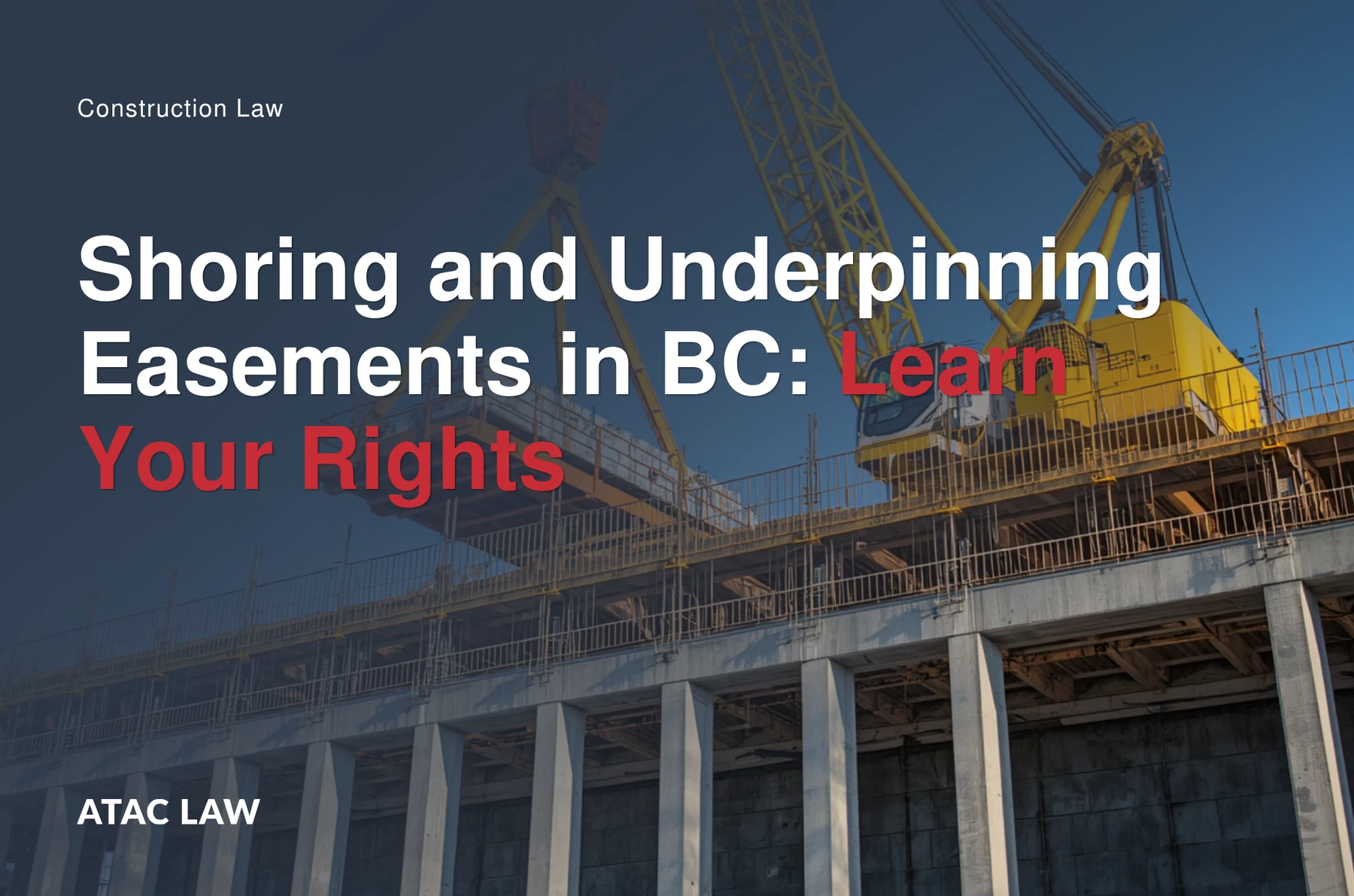
Shoring and underpinning easements in BC grant a developer the right to physically install structural support elements in, against, or beneath a neighbouring property’s soil and foundations. These agreements carry permanent or long-term structural consequences that crane swing easements do not and require independent engineering assessment and significantly stronger legal protections before any BC property owner or strata corporation signs. The structural risks unique to shoring and underpinning requests differ fundamentally from crane airspace use.
What Is a Shoring Easement in BC?
A shoring easement in BC is an agreement granting a developer the right to install temporary lateral support structures in or against the soil and foundations of a neighbouring property to prevent the developer’s excavation from destabilizing or collapsing into the adjacent land. Shoring elements physically penetrate or bear against the neighbouring property and are removed after the permanent structure is built.
Shoring elements are designed as temporary systems, meaning the developer intends to remove them after the permanent basement structure provides the lateral support the shoring previously held. However, removal is not always straightforward in practice — a point addressed specifically in the post-construction section of this article.
What Is an Underpinning Agreement in BC, and How Is It Different from Shoring?
An underpinning agreement in BC authorizes a developer to extend or reinforce the foundation of the neighbouring property from beneath, permanently modifying the foundation system to allow the developer’s excavation to proceed safely at a greater depth than the existing foundation would otherwise permit. Unlike shoring, underpinning is typically permanent.
The permanence of underpinning creates long-term implications the property owner must address in the agreement. The property owner must consider how the permanent underpinning elements will affect future renovation, demolition, or redevelopment of the property, and negotiate representations and warranties from the developer about the long-term structural compatibility of the underpinning design.
Underpinning typically requires a registered easement rather than an unregistered licence, because the permanent modification to the foundation creates an interest in the land that a future purchaser needs to know about at the time of purchase. The distinction between licence and easement for construction access agreements is explained in detail in ATAC LAW’s guide to the Licence to Construct process in BC.
What Types of Shoring Do Developers Use in Metro Vancouver, and What Triggers the Access Request?
Metro Vancouver developers use shoring systems when excavation depth exceeds the stable slope angle of the site’s soil conditions, when site geometry prevents open-cut excavation, or when the proximity of existing structures requires the excavation to be supported vertically from the outset. The specific shoring system determines the extent of access required from neighbouring properties.
Soldier pile walls are the most common shoring system in Vancouver’s mixed-soil conditions.
Sheet pile walls require vibration from pile driving equipment, which propagates through the soil into adjacent foundations. The BC Building Code sets minimum requirements for excavation support adjacent to existing structures, but compliance with the Building Code does not eliminate the developer’s liability to the neighbouring owner for damage caused by shoring operations.
Developers receive municipal permit approval for shoring designs before approaching neighbouring owners for access agreements. The building permit for the shoring system is issued to the developer for work on the developer’s property. The permit does not authorize any physical work on the neighbouring property, and a property owner who receives a request for shoring access after a permit has been issued holds the same legal rights as a property owner approached before the permit stage.
Why Does a BC Property Owner Need an Independent Engineer Before Signing a Shoring Easement?
A BC property owner requires an independent structural engineer’s review of the proposed shoring or underpinning design before signing any access agreement because the owner’s engineer assesses the risk to the existing structure, identifies the pre-construction baseline condition, and specifies the monitoring requirements and restoration standards the agreement must require of the developer.
An independent engineer retained by the property owner reviews the proposed design from the perspective of the burdened structure: load transfer effects on existing foundations, potential settlement, vibration impacts during installation and removal, and the sequencing of work relative to the existing building’s structural behaviour.
Engineers and Geoscientists BC, the professional regulator for structural engineers practising in BC, requires that structural engineers providing services to building owners carry professional liability insurance and comply with the practice standards of the Engineers and Geoscientists BC association. The property owner’s agreement should require the developer to retain a geotechnical engineer with specific Vancouver soil experience, and separately require the owner’s independent engineer’s approval before any shoring or underpinning work begins.
Pre-construction structural assessments serve a second purpose: they establish the verified condition of the property before work begins. A pre-construction condition survey documents all existing cracks, settlements, and structural conditions with photographic and written records.
What Legal Protections Must a BC Shoring or Underpinning Easement Include?
A shoring or underpinning easement in BC must include a pre-construction condition survey obligation, a structural monitoring program, specific restoration standards, a post-construction inspection right, a damage repair obligation with defined timelines, and a holdback or security provision to ensure the developer’s restoration obligations are funded through to project completion.
Pre-construction condition surveys must be completed by a qualified building condition assessor retained jointly by both parties, or by the owner’s independent assessor with results provided to the developer before work commences. The survey scope should cover all interior and exterior finishes, structural elements, drainage systems, and mechanical services within the zone of influence of the proposed work.
Monitoring programs during shoring installation and excavation typically include settlement monitoring points installed on the neighbouring building, inclinometers measuring soil movement, and vibration sensors recording peak particle velocity during pile driving or drilling. The shoring easement agreement must specify acceptable monitoring thresholds and trigger levels that require the developer to halt work and reassess if readings exceed defined limits. Contact ATAC LAW to review proposed monitoring specifications before signing a shoring or underpinning access agreement.
Financial security for restoration obligations is a critical protection that many property owners fail to negotiate.
How Is Shoring Easement Compensation Calculated Differently from a Crane Swing Easement?
Shoring and underpinning compensation in BC is higher than crane swing compensation for equivalent project duration because the physical impact on the property, the structural risk to the existing building, and the long-term consequences of the work are materially greater. Compensation for underpinning agreements with permanent structural modifications is higher, reflecting the permanent encumbrance on the property.
Crane swing easement compensation reflects the temporary use of airspace with no physical impact on the property or its foundations. Shoring compensation reflects temporary physical penetration of the soil, potential vibration damage, required engineering reviews, monitoring costs, and the risk of settlement or cracking. Underpinning compensation reflects all of the above plus the permanent modification to the foundation system and the impact on the property’s future development flexibility.
Compensation for shoring and underpinning agreements typically covers: a base fee for the access right itself, reimbursement of the owner’s independent engineer costs, reimbursement of independent legal costs, reimbursement of the pre-construction condition survey cost, and an additional sum for the disruption and risk imposed on the property during construction. The compensation benchmarks and negotiation framework for all construction easement types are covered in ATAC LAW’s detailed guide to crane swing and construction easement compensation in BC.
What Happens to Shoring Elements After Construction Ends in BC?
After the developer’s permanent structure is complete and the shoring system is no longer structurally required, the developer is obligated under the access agreement to remove all temporary shoring elements from the neighbouring property. In practice, full removal is not always possible, and the agreement must address what happens to elements that cannot be removed without causing damage to the permanent structure.
The shoring easement agreement must specify: the removal obligations for each shoring component type, the method of extraction and any vibration limits during extraction, the inspection and sign-off procedure after removal, the restoration standard for any ground disturbance caused by extraction, and what fee or easement applies to any shoring element permanently abandoned in the neighbouring property’s soil. Abandoned shoring elements that remain in the ground without a registered interest in the land create title ambiguity that affects future demolition and redevelopment. A registered easement or covenant documenting the location and nature of abandoned elements protects both parties and provides clear disclosure to future purchasers of the property.
Frequently Asked Questions
Do I need an engineer before signing a shoring easement agreement in BC?
Yes. An independent structural engineer retained by the property owner reviews the proposed shoring design from the perspective of the existing structure, identifies risks the developer’s engineer is not mandated to assess, specifies monitoring requirements, and establishes the pre-construction baseline condition. Signing a shoring easement without independent engineering review leaves the property owner without a documented baseline for damage claims if settlement or cracking occurs during construction.
Is underpinning permanent in BC?
Most underpinning methods used in Metro Vancouver result in permanent structural modifications to the neighbouring property’s foundation. Underpinning agreements should be registered as easements at the Land Title Office to disclose the permanent encumbrance to future purchasers. Compensation for underpinning is higher than for temporary shoring because the permanent modification affects the property’s long-term structural character and development flexibility.
What is a tieback, and does it stay in my property permanently?
A tieback is a high-strength soil anchor drilled horizontally from the shoring wall face through the excavation boundary into the neighbouring property’s subsoil. Tiebacks transfer lateral load from the shoring wall into stable ground beyond the excavation. After construction, tiebacks are de-tensioned and cut back but the anchor body typically remains in the soil. A shoring easement agreement must address whether abandoned tiebacks require a registered interest in the land and what compensation applies to their permanent presence.
What monitoring is required during shoring installation near my BC property?
Standard monitoring programs for shoring and underpinning work adjacent to existing structures include: settlement monitoring points on the neighbouring building measuring vertical movement at defined intervals, inclinometers measuring lateral soil movement, and vibration sensors recording peak particle velocity during pile driving or drilling. The access agreement should specify the monitoring thresholds at which the developer must halt work and provide a report before continuing, and should require the developer to share monitoring data with the property owner in real time or at defined intervals.
How much more compensation should I receive for shoring versus a crane swing easement?
Shoring and underpinning compensation is higher than crane swing compensation because the physical impact, structural risk, and engineering and legal costs are materially greater. An independent appraisal and legal review are the most reliable way to establish a defensible compensation figure for a specific shoring or underpinning request.