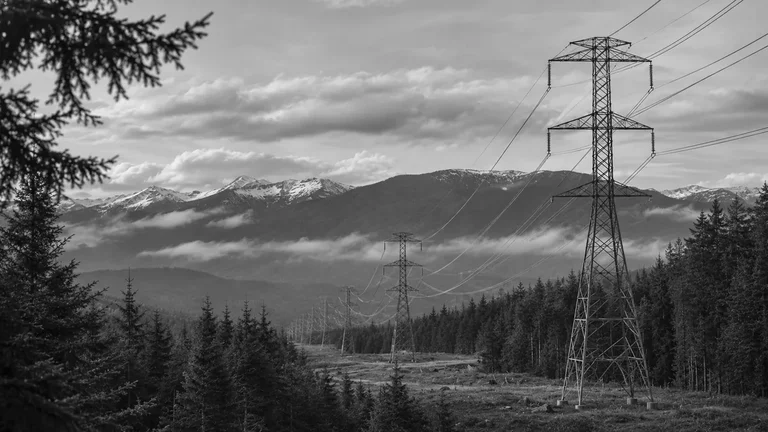
A BC Hydro right of way agreement may grant a statutory right of way under section 218 of the Land Title Act. Registration creates a charge on title that generally binds later owners, according to the terms of the instrument rather than informal discussions during negotiation.
The document that arrives with an offer is a conveyance, not a contract for services. It grants an interest in land whose duration and scope are defined by the instrument and plan. Compensation is often the first concern. The terms govern what BC Hydro may do and how the property may be used afterward.
Timing matters along the North Coast Transmission Line. BC Hydro’s Phase 2 schedule, from Glenannan Substation near Fraser Lake to Skeena Substation in Terrace, identifies 2025 to 2027 for acquiring property rights, spring 2027 for major construction and mid-2032 as the target in-service date. Owners receiving agreements during this period should review the rights being granted before signing.
What is a statutory right of way, and how does it differ from an easement?
A statutory right of way is an easement without a dominant tenement, created under section 218 of the Land Title Act for a purpose necessary for the operation and maintenance of an eligible grantee’s undertaking. Ordinary easement law requires benefited land; section 218 removes that requirement.
An easement at common law ordinarily benefits one parcel at the expense of another. A statutory right of way can instead benefit an eligible undertaking, such as a transmission utility. Registration constitutes a charge and gives the grantee the right to use the charged land according to the instrument. Its terms generally bind successors in title, unless a contrary intention appears. Section 218(4) limits liability for covenant breaches occurring after a signatory ceases to own the land.
Section 218(6) also permits the registrar to accept a recital that the right of way is necessary for the undertaking. That recital addresses proof for registration; it does not determine the scope of every proposed activity or resolve a landowner’s substantive dispute.
Common law easement compared with a statutory right of way under section 218
| Feature | Common law easement | Statutory right of way |
|---|---|---|
| Benefited land | Generally requires a dominant tenement | No dominant tenement required |
| Who may hold it | Owner of the benefited land | Eligible grantee under s. 218(1) |
| Permitted purpose | Defined by the grant | Must fall within s. 218 and the instrument |
| Scope of the right | Defined by the grant | Use of charged land under the instrument |
| Effect on later owners | Generally runs with land | Binds successors unless contrary intention appears |
| Liability after a sale | General legal principles apply | Protection under s. 218(4) for later breaches |
Which document actually binds a landowner who signs?
The binding registered terms may extend beyond the signature pages. A Form C general instrument adopts its operative charge terms either from a separately filed set of standard charge terms or from express terms annexed as Part 2.
The Land Title Act permits Part 2 to adopt standard charge terms filed under section 235 or terms expressly set out in Part 2. Where a filed set is used, section 233(7) requires Part 1 to identify its filing number. Reading only Part 1 may therefore leave the substantive covenants unread. The broader project context is addressed in the guide to North Coast Transmission Line landowner compensation rights.
Section 234 permits additions, amendments or deletions to a filed set. Part 1 must disclose the modification and include it there or in an attached schedule. An inconsistent modified term prevails over the filed standard term. Negotiated changes intended to govern the registered charge should appear in the instrument; separate agreements may create contractual obligations, but do not automatically alter its registered terms.
A complete review therefore assembles five documents before anything is signed:
- Part 1 of Form C, including the filing number or statement adopting express Part 2 terms
- The filed set of standard charge terms, or the annexed Part 2 terms
- Any schedule of modified or additional terms
- The reference or statutory right of way plan
- Current title showing existing charges and their priority
What does the agreement permit BC Hydro to do on the land?
The permitted activities depend on the instrument, within the statutory purpose of the undertaking. BC Hydro describes its registered rights of way as securing rights to construct, operate and maintain power lines and keep the area clear of interference.
Section 218(3)(b) makes the instrument central to the scope of use. A review should identify the width and location of the charged area; rights to install, inspect and replace infrastructure; vegetation clearing; and restrictions on structures, excavation or storage.
Access across the remainder of the parcel deserves separate attention. Reaching the charged area may require passage outside its surveyed boundaries, either under express access provisions or applicable statutory powers. The review should identify proposed routes, gates, fences, livestock arrangements, restoration obligations and the legal basis for any additional access.
What limits does the right of way place on the owner’s own use?
The owner retains title and may use the charged area subject to the instrument, applicable law and BC Hydro’s operational and safety requirements. BC Hydro’s published guidelines require proposals for specified uses to be reviewed and approved.
BC Hydro’s guidelines on compatible uses and development near power lines call for pre-approval for work within or machinery crossing a right of way, development on or adjacent to it, and subdivision of affected land. BC Hydro generally asks for six weeks’ notice and may issue a Compatible Use Letter with conditions. The guidelines must be read alongside the actual registered agreement.
Farming, fencing, driveways and trails are among uses that may receive approval. Burning, blasting, storage of flammable materials, placement of fill, organised parking and buildings are generally incompatible without express written authorisation. BC Hydro generally recommends a 10-metre separation from towers, poles and anchors, subject to site-specific review. Vegetation limits depend on clearances and line characteristics.
Where an approved use requires relocating BC Hydro’s works, the applicant may bear the cost. Other regulators or charge holders may also need to consent. Trees outside the registered area require separate consideration because BC Hydro may have statutory powers to remove danger trees.
How does the agreement affect a mortgage and the other registered charges?
Charges generally rank by the time registration applications are received, subject to statutory rules and contrary intentions in the instruments. BC Hydro may request priority over an existing mortgage, requiring the lender’s agreement.
Section 28 of the Land Title Act governs priority between charges. BC Hydro’s statutory right of way information package identifies financial charges, builders liens, certificates of pending litigation, judgments, options, leases and other registered interests as potential obstacles to registration. Certain charges may require consent, priority arrangements or discharge. A landowner cannot assume a lender will agree to postpone its security.
A lease is worth isolating. The Expropriation Act defines an owner broadly enough to include holders of interests or rights in land and persons in qualifying legal possession or occupation. Where the Act applies, a tenant’s interest may require separate consideration in the compensation process.
What extra step applies to land in the Agricultural Land Reserve?
Section 18.1 of the Agricultural Land Commission Act requires notice to the Agricultural Land Commission before applying to register a statutory right of way affecting land wholly or partly within the Agricultural Land Reserve. Registration requires prescribed proof of that notice.
The requirement took effect on September 30, 2020. The Commission’s Notification of Statutory Right of Way Guide explains the filing procedure and warns that an ALR notation may be absent from title even where land is in the reserve.
Notification is not itself permission for all construction activities. Soil removal, placement of fill or non-farm uses may trigger additional requirements, subject to applicable permissions and exemptions. Agricultural productivity, access, drainage and disruption to farm operations also warrant consideration when assessing compensation.
Which separate agreements cover temporary workspace, access roads and laydown areas?
The registered right of way covers the land and rights identified in its instrument and plan. Temporary workspace, laydown areas, camps or construction access beyond those rights may require separate agreements, subject to BC Hydro’s independent statutory powers.
Separating permanent rights from temporary arrangements is important before signing. A construction licence should identify its duration, location, compensation, permitted activities, restoration standards and responsibility for damage. Temporary use does not become part of the registered charge merely because it concerns the same project. The surveyed boundaries should be checked against the proposed works and the North Coast Transmission Line project information.
Entry powers add a separate category. Section 20 of the Hydro and Power Authority Act authorises BC Hydro, without owner consent and for specified purposes, to enter land, conduct surveys and tests, remove certain trees and make or use access works. Section 9 of the Expropriation Act separately authorises certain pre-expropriation inspections and appraisals, subject to daylight-hour and notification requirements. Section 2(2)(d) excludes entry under the Hydro legislation’s section 20 from the Expropriation Act.
Those powers do not establish that every proposed occupation is lawful. The extent of entry, the authority relied upon and any resulting damage should be reviewed separately from the right of way agreement.
What does a release in a right of way agreement cover, and what does it leave out?
A release may resolve existing claims and, depending on its wording and enforceability, affect future claims. Particular attention belongs on construction damage, loss affecting the remainder of the parcel and compensation for damage arising from statutory entry.
Reviewing a release means examining time and subject matter. Does it address only losses existing when the agreement is signed, or also future construction and operation? Does it include interference with access, crops, drainage, business operations or the remaining land? Payment for the charged area does not necessarily address each of those losses. A broadly drafted settlement may nevertheless restrict later claims.
Section 20(2) of the Hydro and Power Authority Act provides for compensation for damage to crops, gardens, shrubs, trees and other growing things, and other damage arising from the exercise of its entry powers. Disputes over the amount are determined by the Supreme Court of British Columbia. The effect of any release on those claims requires examination.
Section 9(4) of the Expropriation Act separately requires written, signed notice within six months after entry for certain damage claims where land entered under section 9 is not expropriated. That requirement should not be confused with a claim arising under section 20 of the Hydro legislation.
What is the alternative to signing the agreement as offered?
Section 3 of the Expropriation Act permits owners to agree to transfer an interest without agreeing on compensation, leaving that amount for the Supreme Court of British Columbia to determine as if the land had been expropriated. A qualifying agreement also triggers statutory advance-payment requirements.
The choice is not necessarily limited to accepting the offered sum or refusing the project. Under section 3, all owners must agree to the transfer or dedication, but compensation remains disputed. The written agreement must state the consent, court determination of compensation, possession date, steps required for transfer and obligation to make an advance payment. Unless otherwise agreed, the valuation date is the date of the agreement. A standard negotiated right of way does not automatically invoke section 3.
Within 30 days of a section 3 agreement, section 20 generally requires the authority to make its estimated advance payment and provide the supporting appraisal and other reports. Section 25 establishes a critical one-year period after a section 20 payment to commence court proceedings to determine compensation. Failure to apply within that period can result in the payment being deemed accepted in full settlement. Continuing negotiations should not be assumed to extend the deadline.
Two further provisions shape the calculation. Under section 45, an award exceeding 115% of amounts paid under section 20 or otherwise, excluding business losses in the statutory comparison, triggers an obligation to pay recoverable costs; at or below that threshold, costs are discretionary. The recoverable amount remains governed by the statutory rules. Section 10 generally excludes electric transmission lines from the ordinary right to request a public inquiry into an expropriation, but not from the statutory compensation framework.
Advice on BC Hydro right of way agreements
A right of way agreement should be reviewed as a conveyance, with the registered terms and plan examined alongside the offer. ATAC LAW acts for landowners in expropriation and right of way matters, including review of the grant, releases, mortgage priority, temporary access, compensation and the potential use of section 3 of the Expropriation Act. More information appears on the firm’s expropriation law page.
Owners along the North Coast Transmission Line corridor may receive proposed agreements during BC Hydro’s property acquisition period. Review before execution provides an opportunity to address the filed terms, access routes, restoration obligations and compensation arrangements before interests are registered.
Frequently asked questions
Does signing a BC Hydro right of way agreement transfer ownership of the land?
No. The owner generally retains the fee simple, while a statutory right of way is registered as a charge. BC Hydro obtains the rights granted by the instrument, and later owners generally take title subject to that charge.
Where are the terms of a BC Hydro right of way agreement actually set out?
In Part 2 of Form C, either through expressly annexed terms or a filed set of standard charge terms identified by number in Part 1. Any modifications to filed terms should also be reviewed.
Can the terms of a filed set of standard charge terms be changed?
Yes. Section 234 of the Land Title Act permits additions, amendments and deletions recorded in Part 1 or its schedule. Inconsistent modified terms prevail over the filed standard terms.
Does a mortgage lender have to consent to a BC Hydro right of way?
Not in every case. BC Hydro may require a priority agreement from a lender or the consent or discharge of other charge holders. The mortgage terms and registered priority must be reviewed.
What happens if a landowner and BC Hydro cannot agree on compensation?
If the statutory requirements are met, section 3 of the Expropriation Act permits a transfer agreement that reserves compensation for court determination. Advance-payment and limitation provisions apply. If BC Hydro instead expropriates an interest in land, the applicable statutory process must be followed.
Landowners holding a BC Hydro right of way agreement, plan and offer can contact ATAC LAW to arrange an appointment.